There are two ways follow-up usually goes wrong. Either nobody does it, and warm leads go cold, or it’s a stiff three-email sequence that reads like a mail merge. An AI follow up email generator sits between the two: it writes a message about this lead, for this moment, and leaves the sending decision to a person.
What it looks at before it writes
- The last email thread and what was promised in it.
- Your CRM notes: budget, timing, who else is involved.
- Where the lead sits in your process: enquiry, quote sent, post-demo, gone quiet.
- How you usually write, from a sample of your past sent mail.
If any of these is missing, the draft says less. It will not invent a detail to sound personal.
Triggers and what each one drafts
| Trigger | What the draft says | Who approves |
|---|---|---|
| Quote sent, no reply | A short check-in that restates the key point | You, or the person who sent the quote |
| After a meeting | A summary and agreed next steps | The person who ran the meeting |
| Enquiry came in, nobody replied | A quick acknowledgement with one question | Whoever’s on the inbox |
| Lead went quiet | A low-pressure “still relevant?” | The account owner |
| Customer finished a job | A thank-you with a review request | The manager |
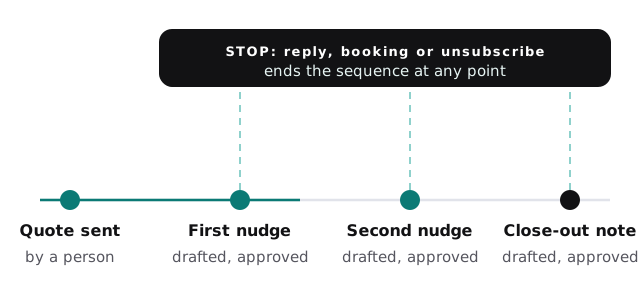
Anatomy of a draft worth sending
- One reason for writing. “Following up on the quote for the kitchen” is better than “just checking in”.
- One thing they said. A detail from the thread that shows someone paid attention.
- One easy next step. A question they can answer in a line, or a link to book.
- No pressure language. No fake deadlines or “last chance” tricks.
- A real signature. From a person, not “the team”.
What gets checked before it’s offered to you
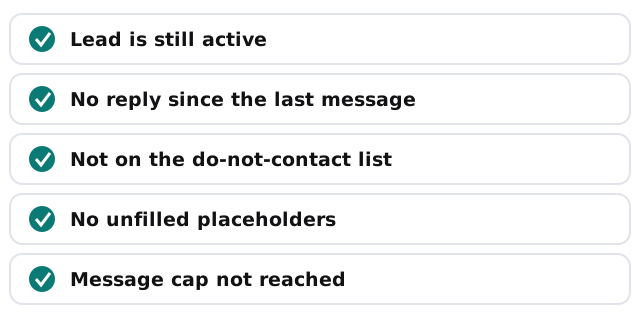
The rules email has to follow
Commercial email is regulated, and the rules reach business-to-business messages too. The FTC’s guide to the CAN-SPAM Act says the law makes no exception for business-to-business email. It also asks for honest sender details and subject lines, a valid postal address, a clear way to opt out, and opt-out requests honored within 10 business days. Sending through a tool doesn’t move the responsibility away from you.
Which of your follow-ups count as commercial is worth asking an adviser. The simple approach is to build every sequence so that opting out works, is recorded and is respected across all of them.
Timing is part of the message
The same words land differently depending on when they arrive. A nudge the morning after a quote reads as keen. One a month later reads as forgotten. The generator uses your sales stages to choose gaps that suit each situation, and a person can always hold a draft until a better moment, such as after a lead’s holiday.
Keeping a person in charge
Drafts go to an approval queue. You can edit, send, snooze or discard each one, and see why the system suggested it. After a few weeks of approving most drafts untouched, you might choose to let a narrow type go out by itself, like a booking confirmation. That’s your call per message type.
Rather build it yourself?
A first version is quite doable with an assistant and a workflow tool. Our guide to drafting email replies with Zapier and AI walks through one, including where to put the human check. We build the version that reads your CRM, enforces the stop rules and keeps a record.
What we need from you
Twenty or so of your best follow-up emails, the stages in your sales process, and your rules for who should never be contacted automatically.
Follow-up isn’t pestering. It’s remembering, on time, what you said you’d do.