AI automation for marketing agencies comes down to margin. An agency sells expertise by the retainer, but a surprising share of the hours is assembly: gathering numbers, merging feedback, retyping briefs, tracking what was promised against what was done.
We build small AI tools and internal tools for that assembly. Your strategists and account managers still do the thinking and own what clients receive.
Five places a retainer leaks
- The monthly report. Numbers copied from ad platforms and analytics into a deck, then a paragraph of commentary written at the last minute.
- Feedback rounds. The same slide commented on in email, chat and a call.
- Briefs. A request that starts as a voicemail and becomes a document someone retypes.
- Scope. Requests that were reasonable alone and expensive together.
- QA. Links, tracking tags and spelling checked by whoever has a spare minute.
The report, drafted by the third
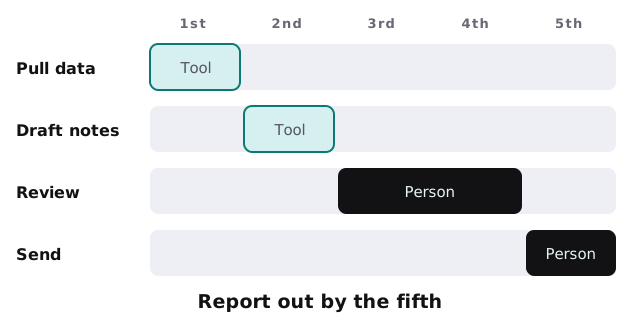
On the first of the month, a tool pulls figures from the sources you’ve connected, compares them to last month and to the goal in the retainer, and drafts commentary: what moved, what probably caused it and what to try next. It marks anything it can’t explain. The account manager rewrites the story and decides what the client should hear.
One change list from many voices
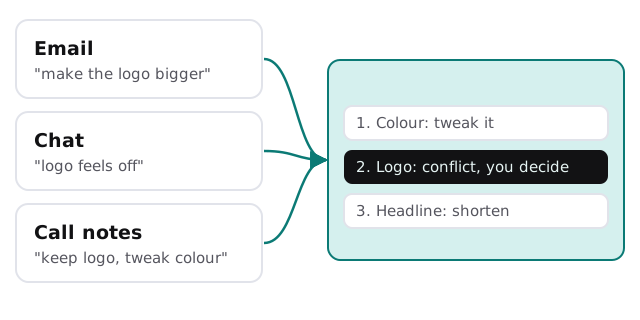
A designer working from three channels will miss something. A tool reads the comments from each, matches them to the slide or asset and builds one numbered list, with contradictions marked. The designer works from the list and the lead sees what changed between rounds.
Briefs and scope, side by side
| Moment | What usually happens | What a tool prepares |
|---|---|---|
| Request arrives | Someone types it into a brief | A drafted brief in your template, questions marked |
| Work begins | Hours logged loosely | A running tally against the retainer |
| Extra round | Absorbed quietly | A note to the account lead before it happens |
| Wrap-up | Memory of what was delivered | A summary of what shipped and what was out of scope |
Campaign QA
Before something goes live, a checklist that nobody enjoys: do the links work, do the UTM tags follow your convention, is the brand name spelled right, are the dates correct? A tool runs the checklist and lists failures for the trafficker to fix. It doesn’t approve a launch.
The software around an agency
- Project management. Tasks, deadlines and approvals.
- Ad platforms and analytics. The sources for every report.
- Time tracking. Hours per client and task.
- Shared drives and asset libraries. Where creative lives.
- CRM. Pipeline and proposals.
If you’d like a first self-built connection, setting up Zapier for your team shows how a form becomes a task.
Questions to ask any provider
- Are clients kept in separate workspaces, with no shared memory between them?
- Does anything we paste in train a model, and is that off in writing?
- Can I see the source behind every number in a drafted report?
- What happens to a client’s data when we end the engagement?
A Wednesday in the first week
Three reports are in draft. The account manager for the largest client opens hers, rewrites the opening paragraph around the one story that matters, and deletes a comparison that doesn’t hold up. It takes forty minutes and not a day. The other two reports follow before lunch, and she’s free to prepare the quarterly call.
The crunch
Month-end reporting and quarter planning put the same few days under pressure for everyone at once. A tool that starts before the crunch, not during it, is worth the most.
What we need from you
A past report and its sources, your brief template, your retainer structure and the tools you use. We return a plan and a fixed quote after the free IT check. A real person replies within 1 business hour, Monday to Friday, 9am to 5pm Pacific.
Clients pay for judgment about their market. Make the assembly someone else’s job, and the judgment gets more of the hours.