Managed IT services for veterinary clinics begin with a simple question: where did that result go? Vet clinics run an unusual number of machines for their size, from X-ray to blood analyzers to microchip readers, and each is a small computer with its own software and its own vendor. The practice management system is supposed to gather everything. It often depends on you to connect them.
From the machine to the patient record
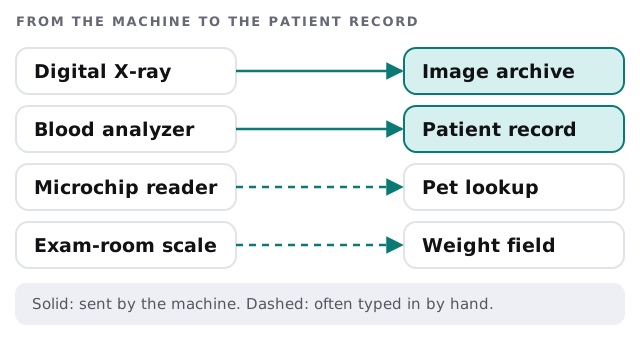
Walk the clinic with a pet’s visit in mind: the exam room, the scale, imaging, the lab, the pharmacy and the front desk. At each stop, ask where the data goes next and whether a person has to retype it. We’re looking for the links that fail without anyone noticing.
What fails quietly
- A software update on the X-ray workstation breaks its link to the archive.
- A new analyzer is added and nobody turns on its interface.
- A tablet in the exam room runs out of storage in the middle of a photo.
- A back-up that covers the patient records but not the image archive.
Images are the big files
Digital X-rays and ultrasound add up quickly. Decide where they live, how they are backed up and how long they are kept. A fast local copy and an off-site copy cover the usual failures: a dead disk and a theft or fire.
Controlled drugs leave a trail
Many clinics stock controlled substances and are DEA registrants. The regulation says registrants keep inventories and records for at least two years from the date of the inventory or record, and that they may keep them electronically or otherwise at the registered location.
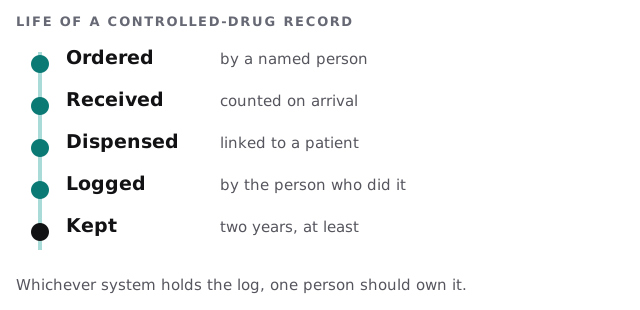
We don’t interpret the rule for your clinic or say that you comply. Ask your practice manager or counsel. For IT, we make sure the log has a backup, the right people can open it and an ex-employee can’t.
Client messages and reminders
Reminders for vaccines, dental cleanings and prescription refills bring clients back and are usually sent by text or email from your practice software or a separate service. Check each month that:
- The reminder service is paid and linked to the practice software.
- Phone numbers are correct in the record.
- Opt-out requests are honoured, and stored.
- Messages from the clinic are signed by the clinic, not an individual’s phone.
Boarding, grooming and the retail shelf
Clinics with boarding, grooming or a small shop add another set of records: kennel bookings, vaccination proof for boarders and a point-of-sale for food and supplements. Decide whether these live in the practice software or a separate tool, and who can see what. A groomer shouldn’t need to open a medical record, and a receptionist shouldn’t have to retype a vaccine date from a card.
A tour for a new vet
New associates arrive with clear expectations. A login, a workstation and a first-day walkthrough should be ready. Give them access to the patient system, the imaging and the pharmacy log that suits their role, and no more. A locum who works for a fortnight needs the same checklist and an end date.
When the network slows on a busy morning
Some mornings bring walk-ins and a full waiting room. Keep guest Wi-Fi, the front-desk tablets and the lab equipment from competing on one network. Update machines on a quiet weekday evening, and keep a spare of the cheap, essential parts such as a label printer and a card reader.
What we need from you
- Your practice management, imaging and lab systems, and who supports each vendor.
- A list of machines that send data to the record.
- Where images and the drug log are backed up.
- Your busiest days.
Monthly care covers access controls, backups and updates. The free IT check ends in a plan and a fixed quote.
A result that never reaches the record might as well not have been taken. Check the links, not just the machines.